
€0.00
Checkout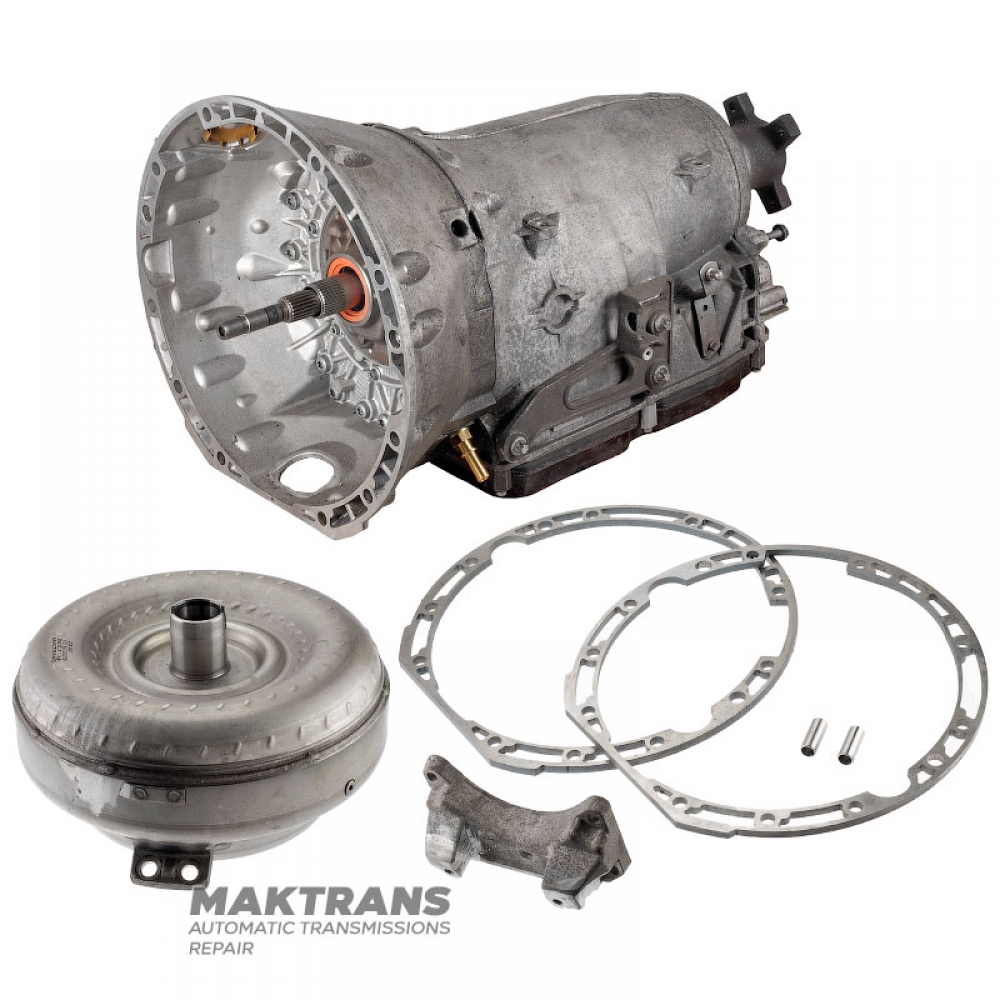

€2 250.00
Main Specifications
Condition (used, new):
Renovated
Equipment level:
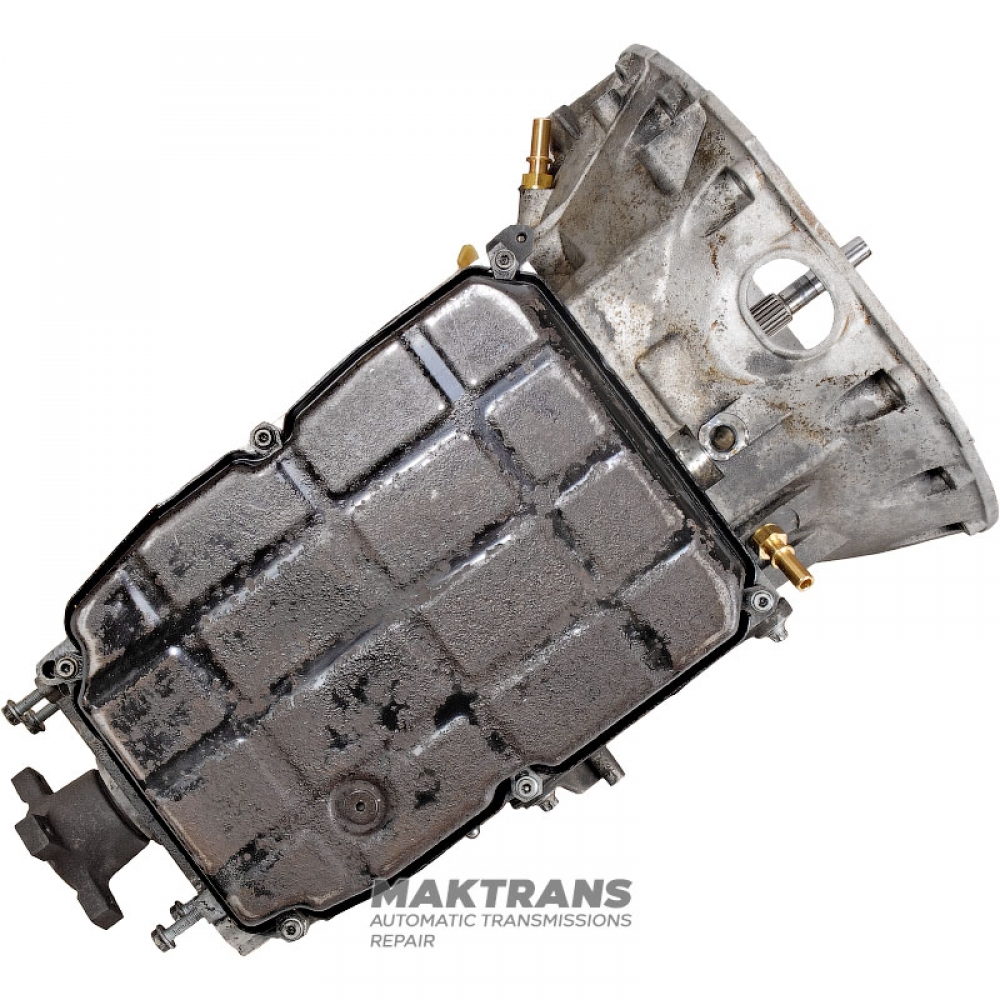
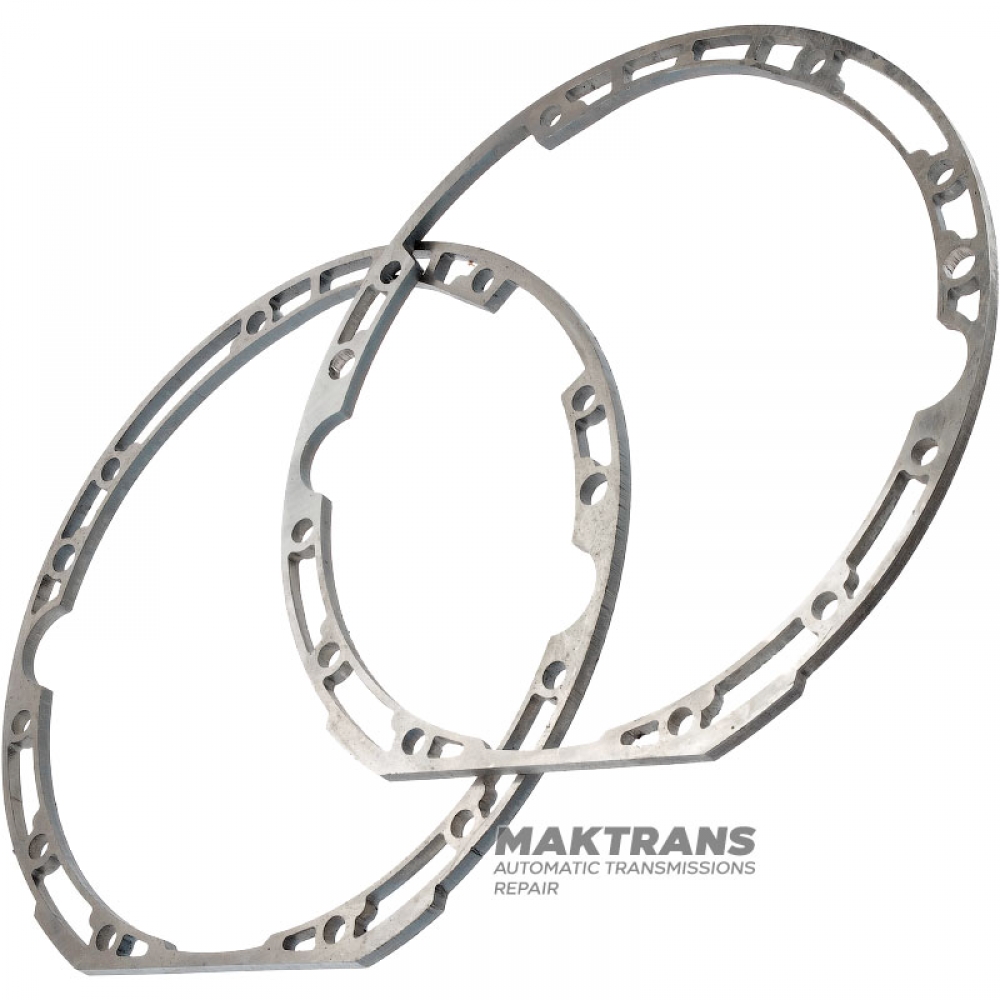
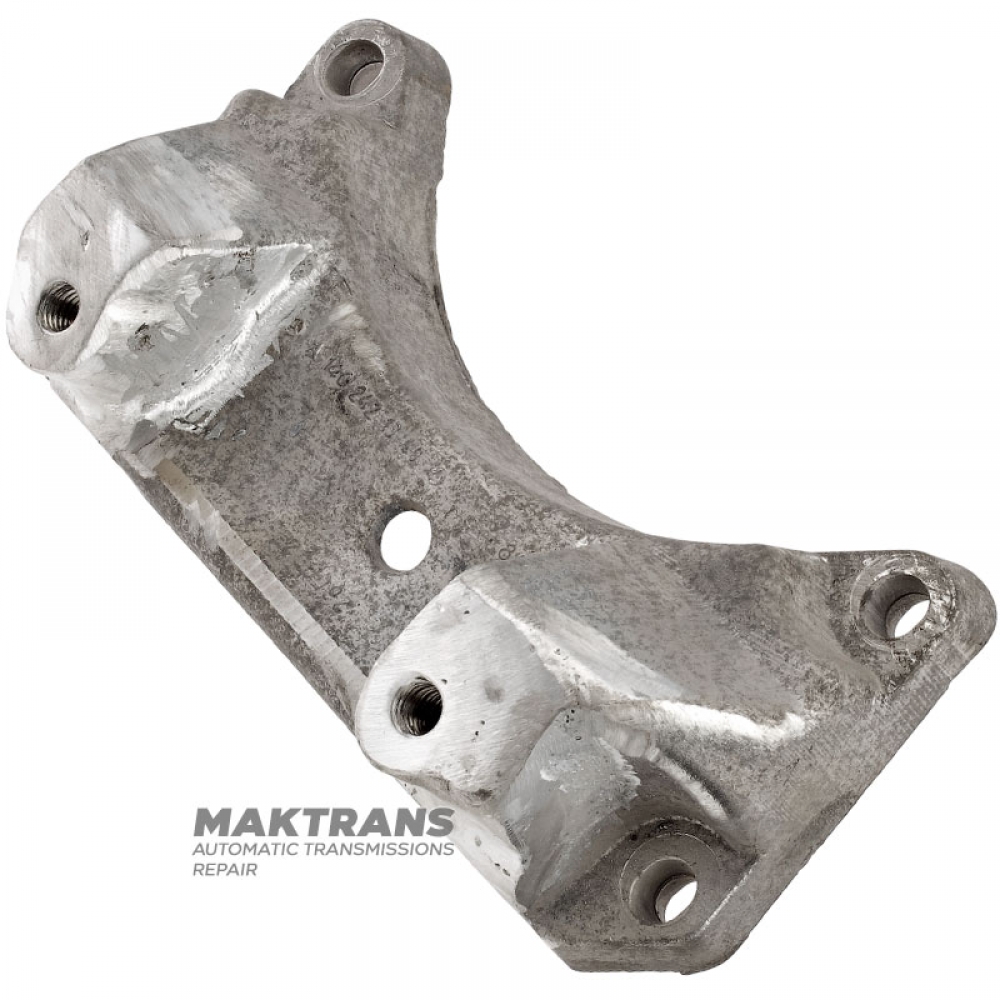
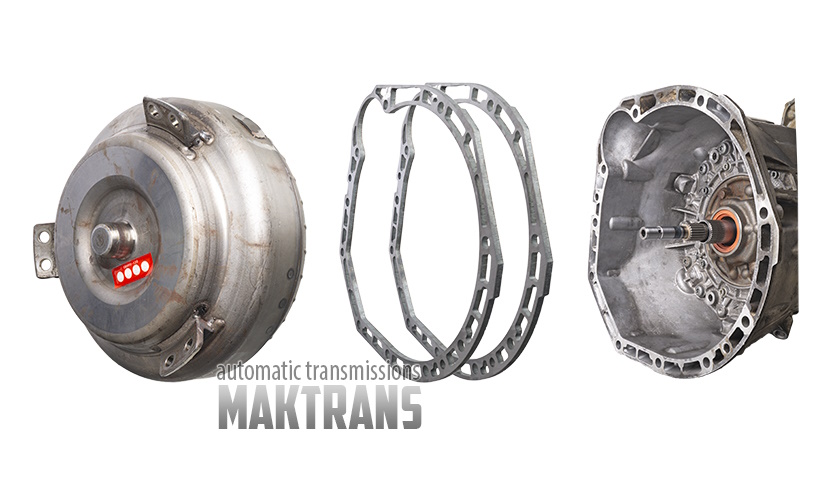
Transmission (assembled), torque converter, adaptation kit (2 spacer plates, rear bracket)
Spare part number(s):
A2122500302, R9012710001
Available Options
| Stock Place: | Availability: | Qty: |
| Ukraine | 1 pcs. |
  |
- Product overview
- Shipping & Payment
- Questions - Answers (0)
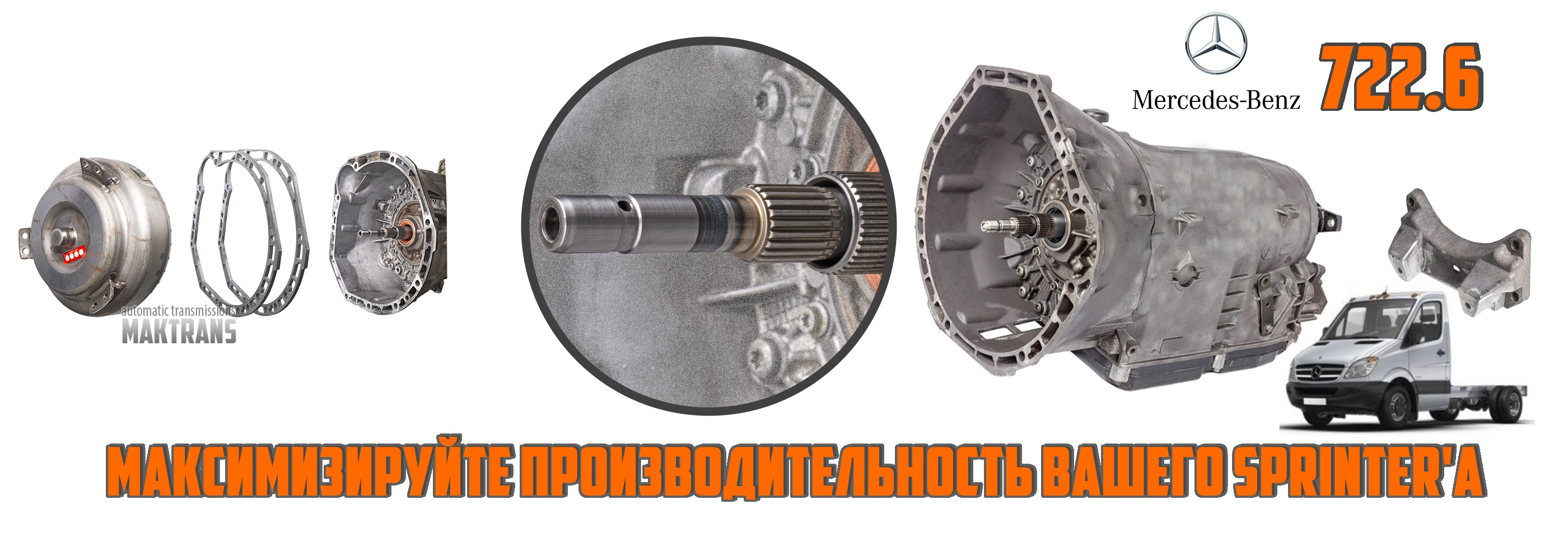
The 722.6 transmission, also known as the 5G-Tronic, is a five-speed automatic transmission used in various Mercedes-Benz models, including the commercial vehicle line known as the Sprinter. Although the transmission is well designed and reliable, breakdowns do occur, especially in commercial applications.
Commercial vehicles are subject to increased loads on vehicle components and assemblies compared to civilian use.
The transmission bears significant loads, especially in light-duty Mercedes-Benz Sprinter trucks with twin rear wheels.
For some reason, it is generally accepted that such a twin layout allows you to take on board a larger amount of payload, since the load will be distributed over 4 wheels (for example, two wheels on each side), and not two as in the standard version.
Without a functioning transmission that can handle the required loads, the number of wheels is irrelevant.
The main problem with the 722.6 Mercedes-Benz Sprinter transmission is the torque converter, commonly known as the "donut".
The torque converter is a rather complex transmission unit in terms of design, consisting of three main components:
1. Pump wheel:
Which is driven by the rotation of the engine and creates a flow of hydraulic fluid inside the torque converter.
2. Turbine wheel:
Which is connected to the drive wheels of the vehicle and uses the flow of hydraulic fluid to transmit torque to the wheels.
3. Reactor wheel or stator:
Which directs the flow of hydraulic fluid between the pump and the turbine, optimizing torque transmission.
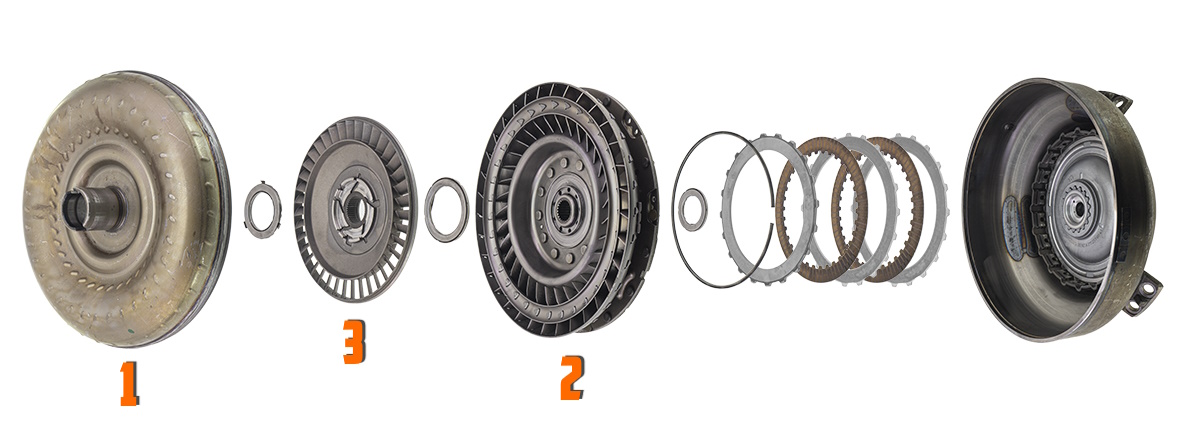
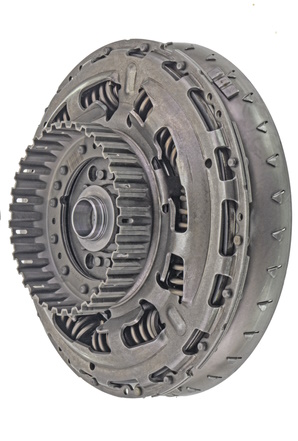
In the 722.6 transmission, the turbine wheel (No. 2 in the figure) is connected to a spring damper, the task of which is to dampen torsional vibrations in the moment and ensure smooth clutch engagement while maintaining traction characteristics.
The Sprinter experiences spring damper failure more frequently than other Mercedes-Benz models with the 722.6 transmission.
We've found and are actively implementing a unique solution that helps prevent torque converter problems for a long time.
The solution lies in installing a reinforced torque converter from more powerful Mercedes-Benz gasoline engines with volumes from 4.4L to 5.5L.
Why this particular "donut"?
This torque converter has a reinforced damper with more powerful springs, both in diameter and in the rod cross-section, which ensures "digestion" of high speeds and the power of a gasoline engine designed for high speeds.
This is exactly what's needed to support the traction loads of commercial, diesel, and light-duty Sprinter trucks. Experience shows that this solution extends the life of the torque converter by 2-3 times compared to a standard one.
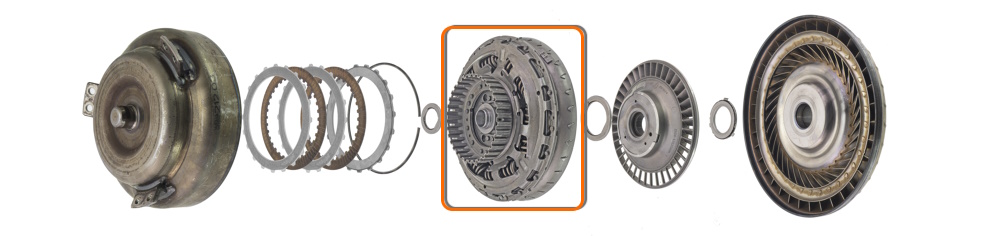
Simply replacing one torque converter with another is not possible due to design features. The reinforced torque converter is 18 mm wider than the standard one.
It is necessary to carry out a set of modifications related to compensation of dimensions relative to the transmission seat.
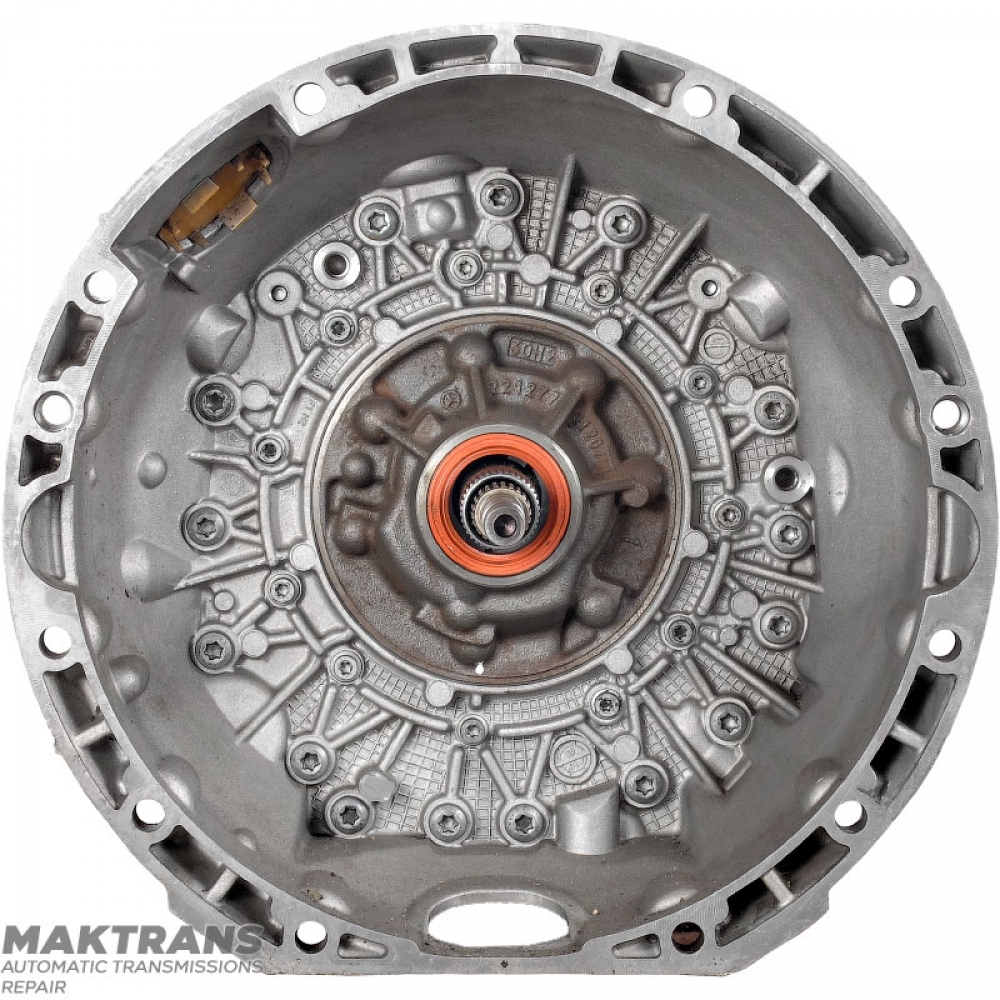
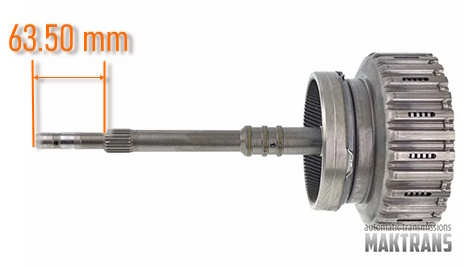
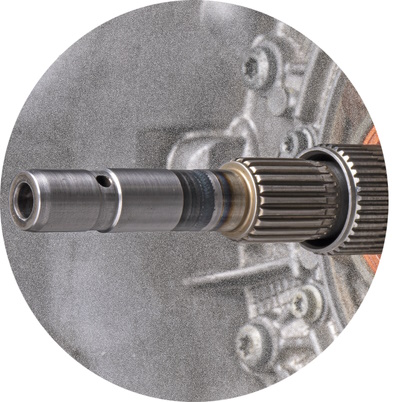
1. Due to the difference in the width of the torque converter, to ensure the operation of the locking clutch, we install an input shaft with an extended nose (63.50 mm), which provides oil supply to the locking clutch.
  |
  |
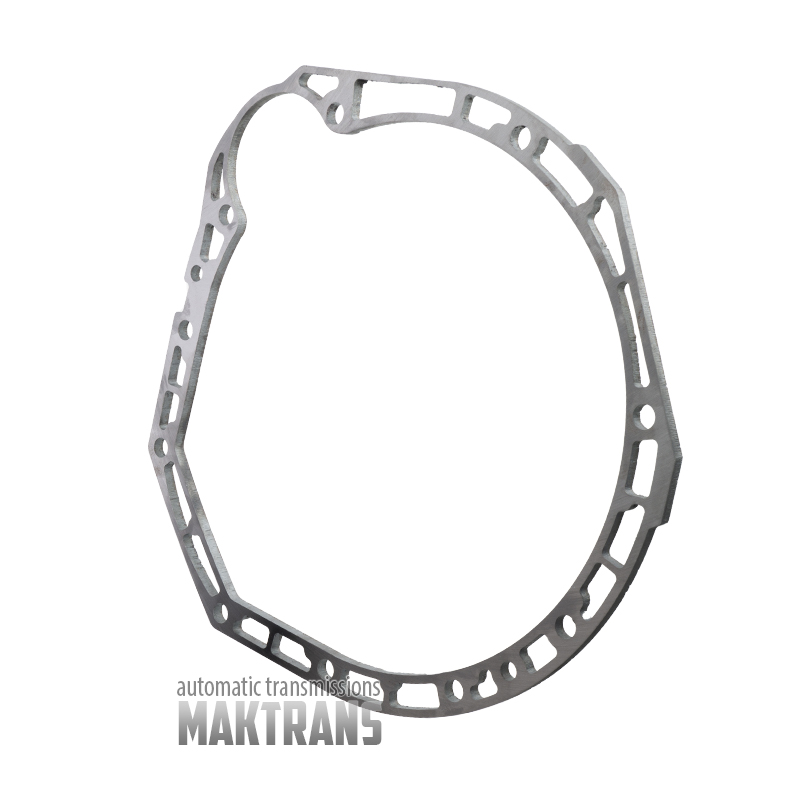
2. To compensate for the difference in the thickness of the torque converter, install two steel spacer plates, 8 mm each, between the engine and the transmission.
 |
 |
But then our rear transmission mount is shifted back by 16 mm and the standard holes do not align with the mount on the body side member.
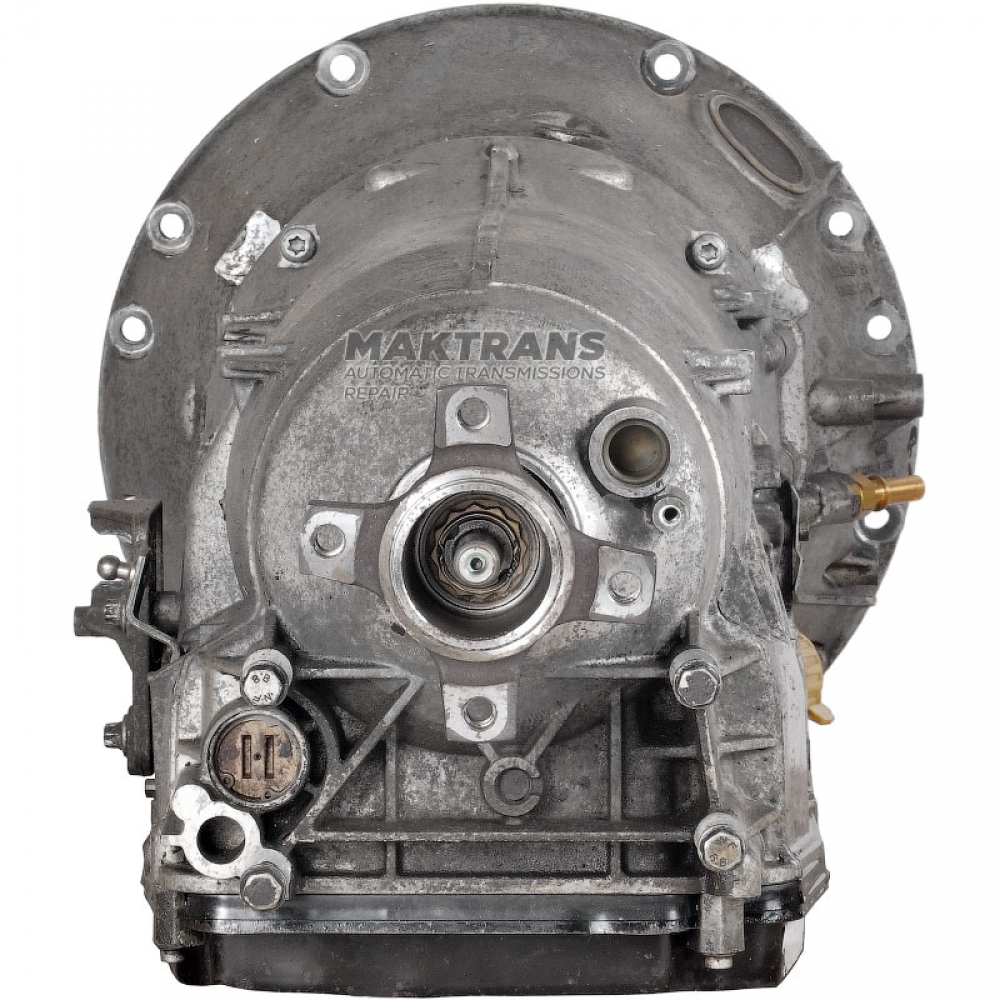
3. To interfere with the supporting structure of the body, we shorten the rear transmission mounting bracket by 16 mm and weld everything using laser welding.
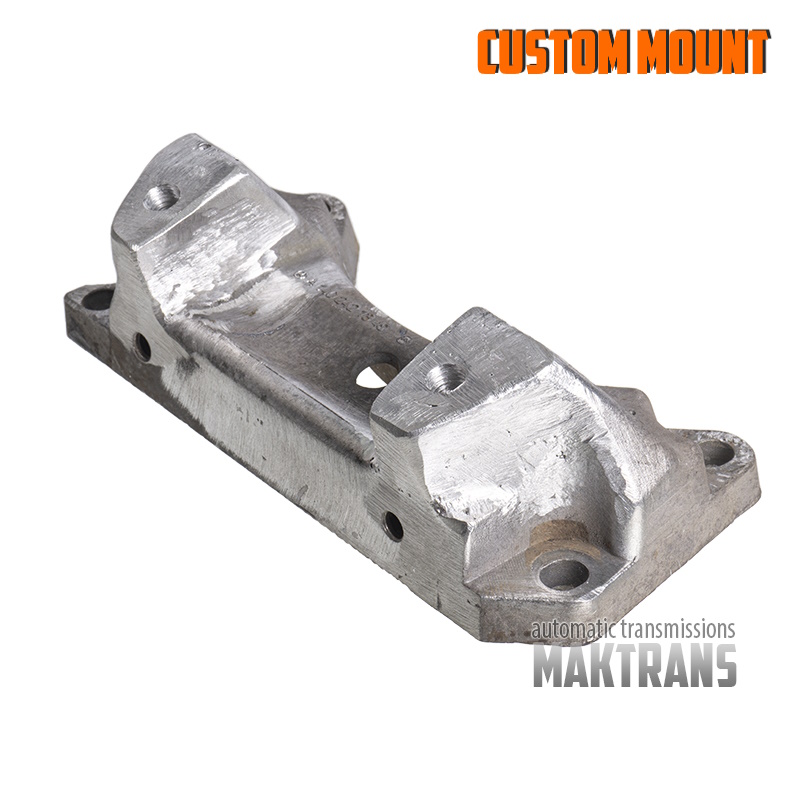
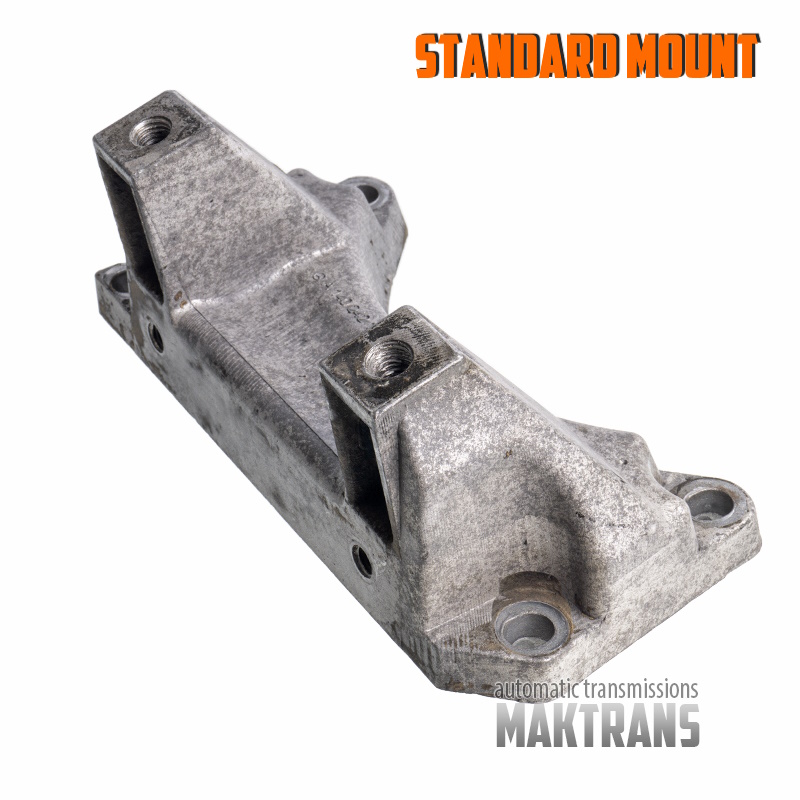 |
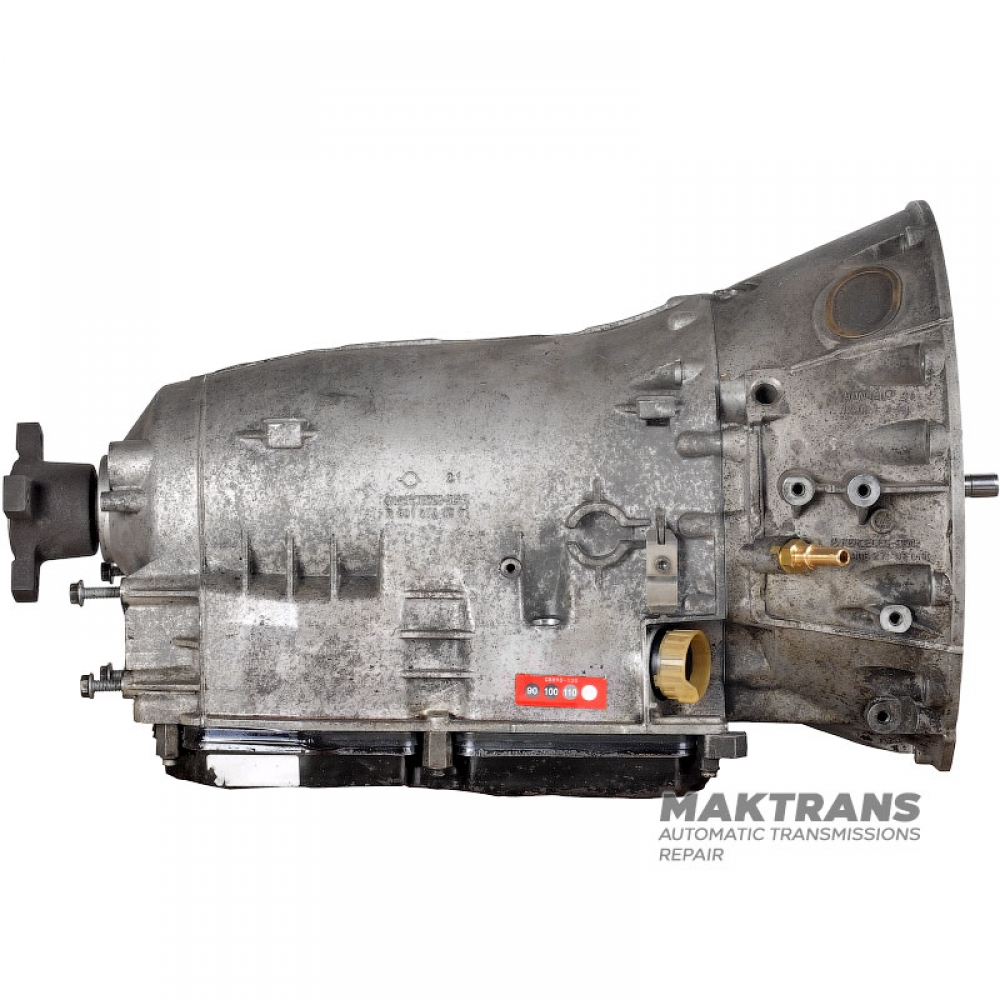
After the work is completed, the transmission is installed in its regular place.